EDITOR BOARD MEMBERS : VIEW ALL
Conflict of Interest Statement
Conflict-of-Interest Statement : : Informed
Consent
Statement : : Human and Animal Rights
Statement
Conflict-of-Interest
Statement: In the peer review process and the credibility of published
articles
depend in part on how well a conflict of interest is handled during writing, peer
review, and
editorial decision making. A conflict of interest exists when an author (or the author`s
institution), reviewer, or editor has financial or personal relationships that
inappropriately
influence (bias) his or her actions (such relationships are also known as dual
commitments,
competing interests, or competing loyalties). These relationships vary from those with
negligible
potential to those with great potential to influence judgment, and not all relationships
represent
true conflict of interest. The potential for a conflict of interest can exist whether or
not an
individual believes that the relationship affects his or her scientific judgment.
Financial
relationships (such as employment, consultancies, stock ownership, honoraria, paid
expert testimony)
are the most easily identifiable conflicts of interest and the most likely to undermine
the
credibility of the journal, the authors, and of science itself. However, conflicts can
occur for
other reasons, such as personal relationships, academic competition, and intellectual
passion.
Informed Consent Statement: Patients have a right
to privacy
that should not be infringed without informed consent. Identifying information,
including patients`
names, initials, or hospital numbers, should not be published in written descriptions,
photographs,
and pedigrees unless the information is essential for scientific purposes and the
patient (or parent
or guardian) gives written informed consent for publication. Informed consent for this
purpose
requires that a patient who is identifiable be shown the manuscript to be published.
Authors should
identify Individuals who provide writing assistance and disclose the funding source for
this
assistance. Identifying details should be omitted if they are not essential.
Complete anonymity
is difficult to achieve, however, and informed consent should be obtained if there is
any doubt. For
example, masking the eye region in photographs of patients is inadequate protection of
anonymity. If
identifying characteristics are altered to protect anonymity, such as in genetic
pedigrees, authors
should provide assurance that alterations do not distort scientific meaning and editors
should so
note. The requirement for informed consent should be included in the journal`s
instructions for
authors. When informed consent has been obtained it should be indicated in the published
article.
Human and Animal Rights Statement: Published
research must
comply with the guidelines for human studies and animal welfare regulations. Authors
should state
that subjects have given their informed consent and that the study protocol has been
approved by the
institute’s committee on human research. Further, they should also state that
animal
experiments conform to institutional standards.
Editor Board
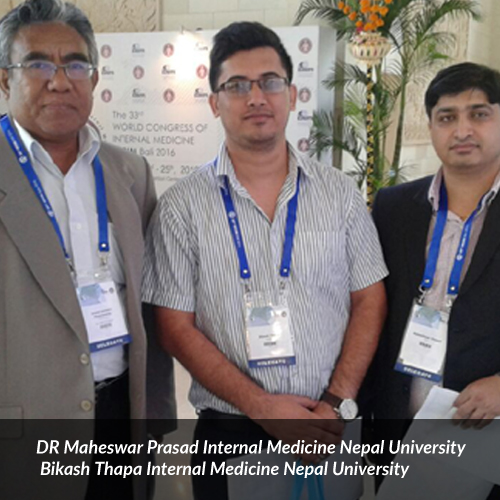
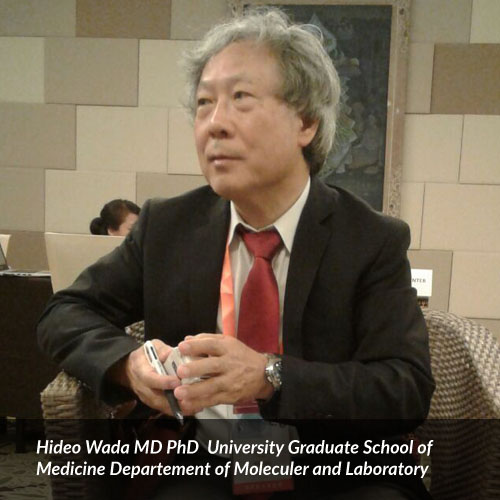
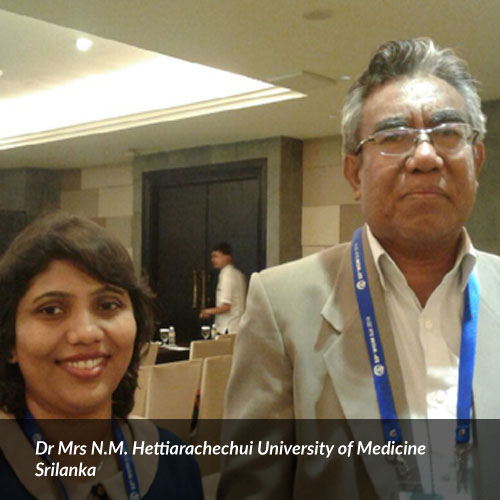
Editor in chief
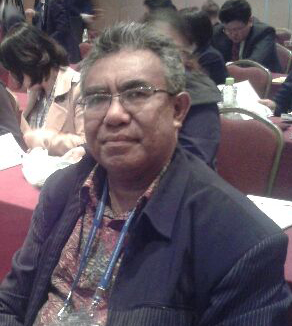
Dr. Arend L Mapanawang, Sp.PD, FINASIM, PhD
Subject Area
Every article submitted to IJHMCR is screened by Turnitin software.

Indexing







PENGUNJUNG KAMI DARI BERBAGAI BELAHAN DUNIA